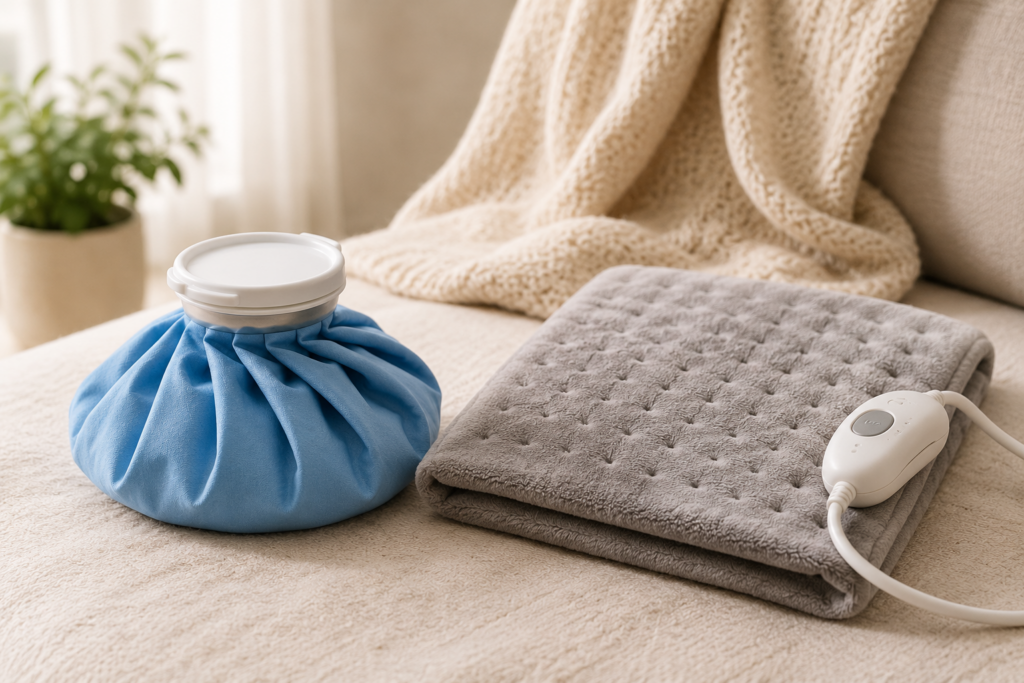
Ice vs. Heat: Which One Should You Use for Pain Relief?
One of the most common questions we hear in our office is:
“Should I use ice or heat?”
The answer depends on what type of pain or injury you’re dealing with.
While both ice and heat can be helpful tools for managing pain, they work in very different ways. Using the right one at the right time can help you feel better faster and support your recovery.
When Should You Use Ice?
Ice is typically most helpful during the early stages of an injury or whenever pain and swelling are the primary concerns.
Consider using ice if:
- You’ve recently sprained, strained, or injured a muscle or joint
- The injury occurred within the last 48–72 hours
- There is noticeable swelling or bruising
- The area feels hot, irritated, or inflamed
- You’re experiencing a sudden flare-up of pain
Ice works by reducing pain signals and temporarily decreasing swelling. It can also help numb sharp or intense pain, making movement more comfortable.
How to Apply Ice
- Use an ice pack or bag of frozen vegetables wrapped in a towel
- Apply for 10–20 minutes at a time
- Allow the skin to return to normal temperature before reapplying
- Never place ice directly on the skin
Remember, the goal of icing isn’t necessarily to stop the healing process. Current research suggests that inflammation is a normal part of recovery. Instead, ice should primarily be used to help manage pain and swelling when they are limiting your ability to move comfortably.
When Should You Use Heat?
Heat is generally best for chronic pain, muscle tightness, and stiffness.
Consider using heat if:
- Pain has been present for several days or weeks
- Your muscles feel tight, stiff, or achy
- You wake up feeling stiff in the morning
- You’re dealing with tension in the neck, shoulders, or low back
- You want to loosen up before exercise or physical activity
Heat increases blood flow to the area and helps relax muscle tissue. Many people find that heat improves flexibility, reduces muscle guarding, and makes movement feel easier.
How to Apply Heat
- Use a heating pad, warm compress, or warm shower
- Apply for 15–20 minutes at a time
- Keep the temperature comfortable, not excessively hot
- Avoid falling asleep with a heating pad on
Heat can be especially beneficial before stretching, exercising, or performing rehabilitation exercises because it helps prepare tissues for movement.
What If You’re Not Sure Which One to Use?
A simple rule of thumb is:
Use ice when pain and swelling are the main problem.
Use heat when stiffness and tightness are the main problem.
Some conditions may even benefit from both. For example, a person with chronic low back pain might use heat before activity to loosen up and ice afterward if the area becomes irritated.
Pay attention to how your body responds. If one option consistently makes you feel better and improves your ability to move, that’s often a good sign you’re on the right track.
Don’t Forget About Movement
Whether you’re using ice or heat, one of the biggest mistakes people make is relying on these treatments alone.
Research continues to show that gentle movement, exercise, and restoring normal function are often more important for long-term recovery than passive treatments alone.
If pain persists, keeps returning, or is limiting your daily activities, there may be an underlying movement problem, joint restriction, muscle imbalance, or injury that needs to be addressed.
When to Seek Professional Help
If your pain:
- Lasts longer than expected
- Continues to return
- Limits your work, exercise, or daily activities
- Is accompanied by numbness, tingling, or weakness
It may be time for a professional evaluation.
At Active Health Chiropractic, we don’t just focus on pain relief—we identify the underlying cause of the problem and develop a personalized treatment plan to help you move better, recover faster, and stay active.
The Bottom Line
Use ice for pain and swelling.
Use heat for stiffness and tightness.
Both can be effective tools, but neither replaces proper movement, exercise, and addressing the root cause of the issue.
If you’re unsure what’s causing your pain or your symptoms aren’t improving, we’re here to help.